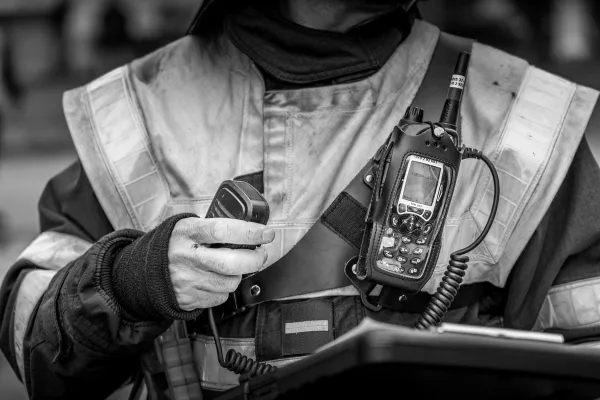
5 Simple Mental Health Tips for First Responders
The Job Doesn’t End When the Shift Does
Being a first responder means stepping into situations most people will never experience.
Police officers. Firefighters. Paramedics. Dispatchers. Corrections officers.
You are trained to stay calm in chaos, to act quickly, and to carry responsibility under pressure.
But even when the shift ends…
your body and mind don’t always follow.
The stress lingers.
The memories replay.
The tension stays.
Over time, this can lead to burnout, fatigue, and emotional strain.
The good news?
Small, consistent habits can make a real difference.
You don’t need to overhaul your life overnight.
You just need a few tools that help you reset, recover, and stay grounded.
Why Mental Health Habits Matter in High-Stress Work

First responder work is not just physically demanding — it’s neurologically demanding.
Your nervous system is constantly switching into high-alert mode:
Responding to emergencies
Processing critical situations
Making fast decisions under pressure
Without proper recovery, your system doesn’t fully reset.
That’s when you may start to feel:
Constantly “on edge”
Mentally drained
Emotionally numb or reactive
Disconnected from life outside work
Mental health isn’t just about reacting when things get bad.
It’s about building daily habits that keep you steady over time.
1. Build a Decompression Routine
One of the most important habits you can build is a clear transition between work and home.
Without it, the stress of your shift can follow you into your personal life.
A decompression routine creates a psychological boundary — a signal to your brain that you are no longer on duty.
This doesn’t have to be complicated.
It can be something simple like:
Sitting quietly in your car for 5–10 minutes
Listening to music or a podcast during your drive
Taking a shower immediately after getting home
Changing clothes as a symbolic reset
The key is consistency.
Over time, your brain begins to associate this routine with safety and recovery.
2. Explore Alternative Therapies
Talk therapy is valuable — but it’s not the only path to healing.
For many first responders, talking through traumatic experiences repeatedly can feel overwhelming or even unhelpful.
That doesn’t mean healing isn’t possible.
It means you may need a different approach.
Holistic and alternative therapies offer ways to process stress without relying entirely on words.
Some options include:
EMDR (Eye Movement Desensitization and Reprocessing)
Somatic or body-based therapies
Equine therapy
Art or music therapy
Light and sound therapy
These approaches work by helping the brain and body release stored stress in a safer, more manageable way.
You deserve to find a method that works for you — not force yourself into one that doesn’t.
3. Use the Physiological Sigh to Reset Quickly

When stress hits in the middle of a shift, you need something immediate.
The physiological sigh is one of the fastest ways to calm your nervous system.
Popularized by neuroscientist Andrew Huberman, this breathing technique helps reduce stress within seconds.
Here’s how to do it:
Take a deep inhale through your nose
Take a second short inhale to fully expand your lungs
Slowly exhale through your mouth
Repeat once or twice.
This works by:
Releasing built-up carbon dioxide
Slowing your heart rate
Signaling your brain to relax
It’s simple, discreet, and effective — even in high-pressure environments.
4. Focus on the Basics (Even When It’s Hard)
Shift work makes routines difficult.
Sleep gets disrupted.
Meals become inconsistent.
Hydration is easy to overlook.
But these “basics” are the foundation of your mental health.
When your body is depleted, your ability to handle stress drops significantly.
Focus on what you can control:
Drink water consistently throughout your shift
Pack balanced, nutritious meals when possible
Prioritize rest on your days off
Limit stimulants like caffeine close to sleep
You don’t need perfection.
You need consistency.
Even small improvements in physical health can significantly improve:
Mood
Focus
Emotional regulation
Energy levels
5. Give Yourself Permission to Seek Help
This may be the most important tip of all.
Many first responders hesitate to seek support because of stigma.
The belief that:
“I should be able to handle this”
“Others have it worse”
“Asking for help means I’m weak”
But the reality is:
Seeking help is a form of strength.
You are exposed to situations that would affect anyone.
Support is not a last resort — it’s a tool for long-term resilience.
Whether it’s:
A therapist
A support group
A trusted professional
A holistic practitioner
Having a space to process what you carry can change everything.
Small Steps Lead to Real Change
You don’t need to apply all five tips at once.
Start with one.
Build it into your routine.
Let it become natural.
Then add another.
Mental health isn’t built in big moments.
It’s built in small, repeated actions.
You Take Care of Others — Don’t Forget Yourself
Every day, you show up for people in their worst moments.
You bring order to chaos.
You provide safety in uncertainty.
You carry responsibility most people will never understand.
But you are still human.
And humans need support, recovery, and care.
Taking care of your mental health doesn’t make you less effective.
It makes you more sustainable.
The Phoenix Foundation: Supporting Those Who Serve

At The Phoenix Foundation, we believe first responders deserve access to mental health support — without financial barriers.
We provide free, confidential holistic mental health services to those whose workplace benefits have been exhausted.
From EMDR to alternative therapies, our mission is simple:
Make sure every first responder has access to the care they deserve.
You Answer the Call. Let Us Answer Yours.
Taking care of your mental health is not a one-time decision.
It’s a daily practice.
If this post resonated with you:
Try one of these tips this week
Share this with a colleague or loved one
Start a conversation
A simple step can create meaningful change.
And if you’re in a position to support others:
Your donation helps provide free mental health care to first responders who need it most.
Every contribution goes directly toward helping those who protect our communities.
