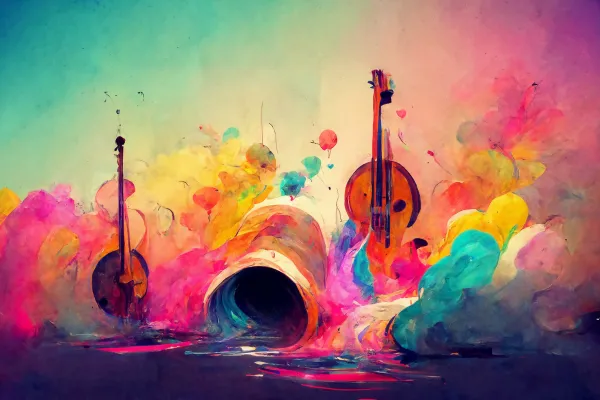
Art & Music Therapy for First Responders | Creative Healing
When the Experience Has No Language
As a first responder, you are trained to communicate clearly.
You give concise reports.
You relay critical information under pressure.
You solve problems quickly and decisively.
But some experiences resist language.
How do you explain the weight of a loss that stays with you?
How do you describe the images that return uninvited?
How do you put grief, anger, or exhaustion into words when they live deeper than speech?
When language falls short, healing doesn’t have to stop. At The Phoenix Foundation, we recognize that trauma often lives beyond words. That’s why we offer Art and Music Therapy — creative, non-verbal approaches that access healing in a different way.
Why Creativity Matters in Trauma Healing

Trauma doesn’t only affect thoughts — it impacts the brain’s emotional and sensory centers.
When trauma is stored in these areas, talking about it can feel:
Overwhelming
Frustrating
Re-traumatizing
Inadequate
Creative therapies work differently. They engage the brain through expression, rhythm, movement, and sensory experience, allowing emotions to surface safely without requiring explanation.
For many first responders, this opens a door that traditional therapy cannot.
What Is Art Therapy?
Art therapy is a guided therapeutic process that uses creative expression as a tool for emotional exploration and healing.
You don’t need any artistic skill.
There is no right or wrong outcome.
Art therapy may involve:
Drawing or painting
Sculpting or working with clay
Collage or mixed media
Simple, guided creative exercises
The focus isn’t on the artwork itself — it’s on the process.
Creating art can:
Reduce stress hormones
Improve emotional regulation
Increase self-awareness
Provide a sense of control
Create distance from overwhelming emotions
A trained art therapist helps you gently explore what surfaces, offering insight without pressure or judgment.
Putting the Weight Somewhere Safe
First responders are experts at holding things together.
Over time, unexpressed emotions can build up internally, leading to:
Emotional numbness
Irritability or anger
Anxiety or depression
Burnout
Disconnection from self or others
Art therapy offers a place to put the weight down.
Instead of carrying everything inside, emotions can be placed:
On paper
In color
In shape
In form
This externalization often brings relief — even when the emotion can’t be named.
What Is Music Therapy?

Music therapy uses sound, rhythm, and melody to support emotional regulation and trauma processing.
Music reaches parts of the brain that words cannot. It can:
Regulate heart rate and breathing
Influence mood
Release emotional tension
Support memory processing
Create a sense of connection and safety
Music therapy may include:
Listening to calming or meaningful music
Guided relaxation with sound
Playing simple instruments
Drumming or rhythmic movement
Songwriting or sound exploration
You don’t need musical experience. The goal is expression, not performance.
Releasing Emotion Through Rhythm and Sound
Trauma often traps energy in the body.
Music — especially rhythm — offers a way to release that energy safely.
For first responders who feel:
Restless
On edge
Emotionally blocked
Overstimulated
Music therapy provides a structured outlet. Drumming, for example, can release pent-up tension without words. Slow, rhythmic sounds can soothe a nervous system that has been pushed too hard for too long.
A Non-Judgmental Space to Be Human
Both art and music therapy create spaces where:
There is no expectation to explain
There is no pressure to “fix” anything
There is no right way to heal
This can be especially powerful for first responders who:
Struggle to talk about the job
Feel emotionally guarded
Have difficulty identifying emotions
Find traditional therapy overwhelming
Creative therapies meet you where you are — exactly as you are.
Supporting the Nervous System Gently
Art and music therapies help calm the nervous system by:
Encouraging focused attention
Reducing hypervigilance
Creating sensory grounding
Supporting emotional release at a manageable pace
This makes them an excellent complement to other therapies, including:
EMDR
Reiki
Reflexology
Aqua therapy
Talk therapy
For some, creative therapy becomes the bridge that makes deeper healing possible.
Finding Control in the Creative Process
Trauma often involves loss of control.
Creating something — even something simple — restores a sense of agency.
Choosing colors.
Setting a rhythm.
Deciding when to start and stop.
These small acts can rebuild confidence and help first responders reconnect with themselves beyond the uniform.
When You Don’t Know What You’re Feeling
Sometimes the hardest part is not knowing what’s wrong — only knowing that something is.
Creative therapies allow feelings to emerge naturally, without forcing clarity too soon.
You don’t have to figure it out first.
You don’t have to explain it perfectly.
Healing can begin even in uncertainty.
Art and Music Therapy at The Phoenix Foundation

At The Phoenix Foundation, we proudly offer art and music therapy at no cost to first responders whose workplace benefits have been exhausted.
Our mission is grounded in compassion and access:
Healing should never depend on the size of a paycheck.
We provide:
Trauma-informed therapists
Safe, supportive environments
Creative outlets free from judgment
Care designed specifically for first responders
You’ve spent years holding space for others.
This is a space held for you.
Help Us Support Creative Healing
These therapies are made possible through community generosity.
Your donation helps provide:
Art supplies
Instruments and equipment
Time with trained therapists
A safe outlet for emotional expression
One contribution can help a first responder transform pain into something tangible — something lighter, safer, and more manageable.
Please consider supporting The Phoenix Foundation today.
Together, we can ensure that when words fail, healing still happens.
