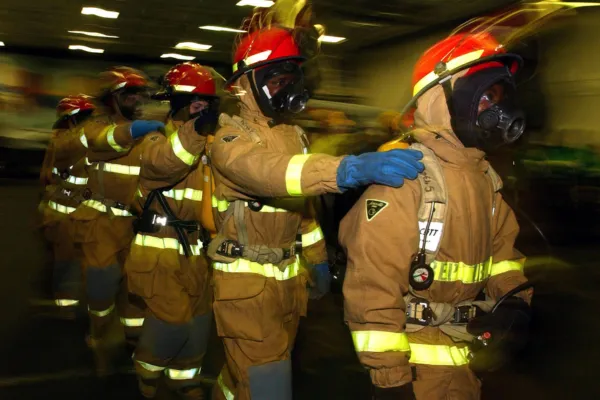
Healing Beyond the Badge: Holistic Mental Health for First Responders
The Weight You Carry Doesn’t End With the Shift
First responders are the backbone of our communities.
Firefighters. Police officers. Paramedics. Dispatchers. Military personnel. Corrections officers.
You run toward danger when others run away. You make decisions in seconds that others couldn’t make in a lifetime. You hold the line in moments where everything feels like it’s falling apart.
But when the call ends…
When the uniform comes off…
When the world quiets down…
The weight doesn’t always leave you.
It stays in your body.
It lingers in your thoughts.
It shows up in your sleep, your mood, your relationships.
And the question becomes:
Who heals the healers?
At The Phoenix Foundation, we believe that those who protect others deserve access to care that truly understands the depth of what they carry.
Why Traditional Approaches Don’t Always Feel Like Enough
There is no question that traditional mental health support — like talk therapy and medication — can be life-changing. For many, these tools are essential.
But for first responders, they don’t always tell the whole story.
The nature of your work is different:
Repeated exposure to trauma
High-stress, high-stakes environments
A culture that values strength, control, and composure
Limited time to process between incidents
Because of this, many first responders find that:
Talking about trauma can feel overwhelming or ineffective
Words don’t fully capture what was experienced
The body still feels tense, even when the mind understands
Healing feels incomplete
This doesn’t mean something is wrong with you.
It means your healing may require more than one approach.
What Is Holistic Healing?

Holistic healing focuses on the whole person — not just thoughts, but also the body, nervous system, and emotional state.
It recognizes that trauma can live in:
Muscle tension
Breathing patterns
Sleep cycles
Emotional responses
The nervous system itself
Instead of asking you to “talk your way through it,” holistic therapies create opportunities for the body and mind to release, regulate, and restore.
At its core, holistic healing is about:
Balance
Connection
Safety
Long-term well-being
Why Holistic Therapies Work for First Responders
First responders are trained to act — not always to process.
In high-pressure environments, your brain shifts into survival mode. It suppresses emotion so you can do your job effectively. But those emotions don’t disappear — they get stored.
Holistic therapies help access those deeper layers without forcing you to relive them verbally.
They are especially effective because they:
Work with the nervous system directly
Reduce reliance on verbal expression
Support both physical and emotional healing
Restore a sense of control and safety
Healing becomes something you experience, not just something you understand.
Powerful Holistic Therapies That Support Healing
At The Phoenix Foundation, we connect first responders with a range of therapies designed to meet different needs, comfort levels, and healing styles.
Clinical Hypnotherapy: Rewiring the Subconscious
Clinical hypnotherapy helps access the subconscious mind — where automatic responses and trauma patterns often live.
In a deeply relaxed state, you can:
Reframe stress responses
Reduce anxiety triggers
Shift patterns of hypervigilance
It’s not about losing control — it’s about regaining it.
EMDR: Reprocessing Trauma Safely
Eye Movement Desensitization and Reprocessing (EMDR) is one of the most effective trauma therapies available.
It helps the brain:
Reprocess traumatic memories
Reduce emotional intensity
Move experiences from “present threat” to “past event”
You don’t have to relive every detail.
You don’t have to explain everything.
Your brain does the work — at your pace.
Trauma-Informed Movement: Reconnecting With Your Body
Stress and trauma often disconnect you from your body.
Trauma-informed practices like gentle movement or yoga help:
Release stored tension
Improve breathing and awareness
Restore a sense of safety in the body
It’s not about performance — it’s about presence.
Equine Therapy: Building Trust Without Words
Working with horses offers a unique, non-verbal healing experience.
Horses respond to energy, not rank or title. They reflect your internal state without judgment.
Through this connection, you can:
Rebuild trust
Improve emotional awareness
Experience calm and grounding
No words required — just presence.
Healing Looks Different for Everyone

One of the most important truths about healing is this:
There is no single path that works for everyone.
Some first responders benefit from talk therapy.
Others find relief in movement, creativity, or sensory-based therapies.
Many need a combination.
Holistic care gives you options — and the freedom to discover what works for you.
You Are Not Meant to Carry This Alone
The culture of first response often emphasizes resilience, strength, and self-reliance.
Those qualities save lives.
But they can also make it harder to ask for help.
If you’ve been carrying this weight silently, you’re not alone.
And you don’t have to keep doing it that way.
Seeking support isn’t a sign of weakness.
It’s a step toward staying in the fight — for your life, your family, and your future.
A Message for Families and Loved Ones
If you’re reading this as a partner, friend, or family member:
Your role matters more than you may realize.
You may not fully understand what your loved one has experienced — but your support can make a powerful difference.
You can:
Encourage them to explore different forms of healing
Share resources like The Phoenix Foundation
Offer patience and understanding
Remind them they don’t have to go through this alone
Sometimes, healing begins with simply knowing that support exists.
A Future That Feels Lighter
Imagine waking up without the weight of yesterday’s call.
Imagine your body feeling calm instead of tense.
Your mind is quieter.
Your sleep is deeper.
Your relationships are stronger.
That future isn’t out of reach.
Healing doesn’t mean forgetting what happened.
It means no longer being controlled by it.
The Phoenix Foundation: Here for Those Who Serve

At The Phoenix Foundation, our mission is simple:
Provide holistic mental health support to first responders — at no cost when benefits have been exhausted.
We offer access to therapies that go beyond traditional care, because we understand that your experiences require more than a one-size-fits-all solution.
You’ve spent your life showing up for others.
We’re here to show up for you.
Take the First Step
You don’t have to have everything figured out.
You don’t have to know which therapy is right.
You don’t have to explain everything perfectly.
You just have to take one step.
Reach out. Explore your options. Stay open.
Healing doesn’t happen all at once — but it does happen.
And you deserve it.
