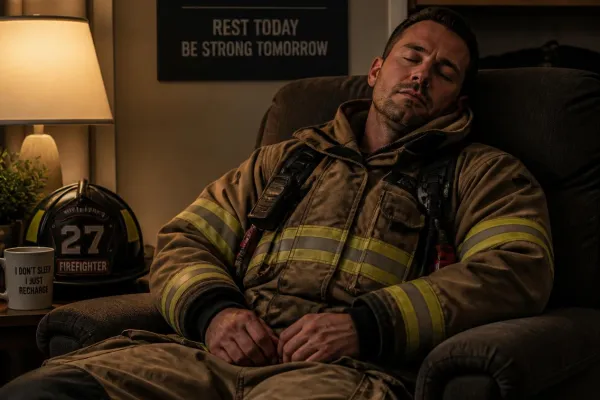
Reclaiming Rest: Why Sleep Matters for First Responders
For first responders, rest can feel like something you earn only after everything else is done.
After a long shift, your body may be exhausted, but your mind can still be running. The adrenaline from the day may linger. A difficult call may replay in your thoughts. Your phone may be nearby, ready for the next emergency. Even when you finally have time to sleep, switching off can feel almost impossible.
But sleep is not a luxury. It is an essential part of mental and physical recovery.
For firefighters, police officers, paramedics, dispatchers, military personnel, and corrections officers, irregular schedules and repeated exposure to high-stress situations can make healthy sleep especially difficult. Over time, poor sleep can leave you feeling more irritable, unfocused, emotionally drained, and less equipped to handle the demands of the job.
Your body needs a chance to come down from the call.
Why Sleep Matters for Mental Health
Sleep gives the brain and body an opportunity to recover from the demands of the day. When you consistently miss out on quality rest, stress can become harder to manage.
You may notice:
Difficulty concentrating or making decisions
Increased irritability or emotional sensitivity
Persistent fatigue
Racing thoughts at bedtime
Reduced motivation
Feeling constantly “on”
Greater difficulty coping with stressful situations
For first responders, these challenges can be especially frustrating. You may be trained to function under pressure, but being capable of pushing through exhaustion does not mean your body does not need recovery.
Prioritizing sleep is not about becoming less resilient.
It is about protecting the resilience you already have.
Creating a Transition From Shift to Sleep
Your nervous system may not immediately recognize that the danger is over simply because your shift has ended.
Creating a consistent wind-down routine can help establish a clearer boundary between work and rest.
That routine could be simple:
Dim the lights. Give your brain a signal that the day is winding down.
Put the phone away. Constant notifications can keep your mind connected to work even when you are physically at home.
Take a warm shower. A familiar routine can help create a sense of transition.
Practice slow breathing. Spend a few quiet minutes focusing on your breathing rather than the events of the shift.
Keep your bedroom comfortable and dark. Make your sleep environment as restful as possible.
You do not need a complicated wellness routine. Sometimes, consistency matters more than complexity.
When Your Mind Won’t Switch Off

Sometimes, the problem isn't simply your sleep environment.
Your mind may still be processing something that happened during your shift.
A difficult call. A conversation with a family member. A traumatic scene. A decision you keep questioning.
If your thoughts begin racing when your head hits the pillow, try giving them somewhere else to go.
Writing down your thoughts before bed can help create some mental distance. You might make a simple note of what is bothering you, what can wait until tomorrow, and what is outside your control.
You can also remind yourself:
“The shift is over. I am allowed to rest.”
You don't have to solve everything tonight.
Healing Is More Than Getting More Sleep
While healthy sleep habits can support well-being, persistent sleep problems may be connected to stress, trauma, anxiety, or other concerns that deserve professional attention.
You don't have to figure that out alone.
Holistic approaches can complement traditional mental health care by helping you reconnect with your body and create opportunities for relaxation. Practices such as mindfulness, trauma-informed yoga, acupuncture, and other supportive therapies may be part of a broader wellness plan developed with qualified professionals.
The goal isn't simply to sleep more.
The goal is to create a life where your body feels safe enough to rest.
Give Yourself Permission to Recover
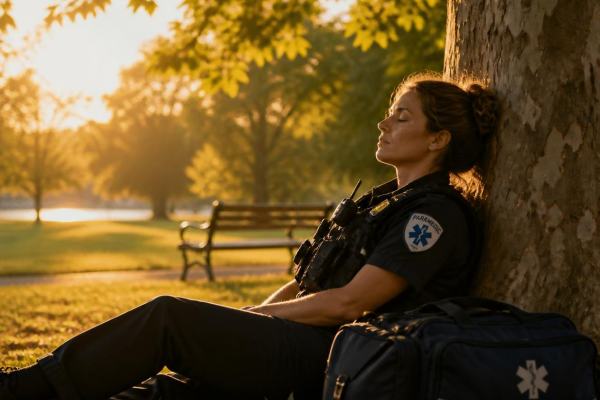
First responders are accustomed to being ready.
Ready for the next call.
Ready for the next emergency.
Ready to help someone else.
But you deserve moments when you don't have to be ready for anything.
Rest is not weakness. Taking a break is not giving up. Seeking support is not failing.
Recovery is part of resilience.
If you've been struggling with sleep, stress, or the emotional weight of your work, consider reaching out for professional support. You don't have to wait until things become unbearable before asking for help.
A Community That Helps You Heal
At The Phoenix Foundation, we believe first responders deserve access to meaningful mental health support without having to carry the burden alone.
Our mission is to help provide free, confidential mental health resources to first responders whose work benefits have been exhausted. This support is made possible through the generosity of people who believe that those who protect our communities deserve care, too.
If this message speaks to you, share it with a first responder in your life. Someone you know may be exhausted but unsure how to ask for help.
And if you want to help make these resources available, consider supporting The Phoenix Foundation.
You spend so much of your life answering the call. You deserve the opportunity to rest, recover, and heal.
