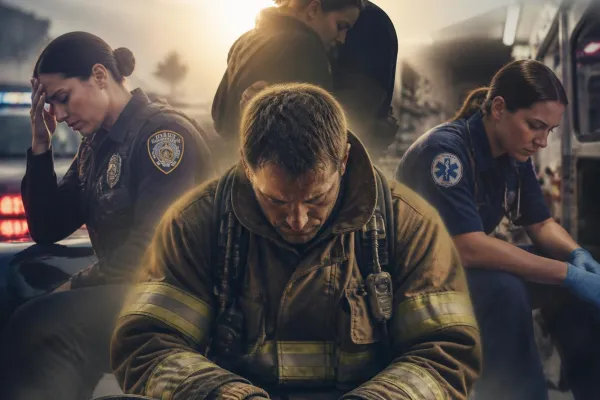
The Strength in Vulnerability: Emotional Healing for First Responders
As a first responder, you are often expected to be the strong one.
You remain calm when situations become chaotic. You make difficult decisions under pressure. You comfort people on some of the worst days of their lives. You learn to focus on what needs to be done, even when the circumstances are overwhelming.
But what happens after the emergency is over?
What happens when you are finally alone with everything you witnessed, felt, and carried?
For many first responders, showing emotion can feel uncomfortable. You may have been taught to stay tough, push through, and keep moving. Over time, suppressing difficult emotions can become a habit.
But true strength isn't about never feeling pain. It's about having the courage to acknowledge it.
Vulnerability is not weakness.
It can be an important part of healing.
Emotional healing gives you an opportunity to process difficult experiences, reconnect with yourself, and move forward without pretending that everything is fine.
Why First Responders May Struggle With Vulnerability
First responders work in environments where composure matters.
During an emergency, there may not be time to stop and process fear, sadness, anger, grief, or uncertainty. You have a job to do, and someone needs your help.
So you put your emotions aside.
Sometimes that is necessary in the moment.
The challenge can come when those emotions never get a chance to be addressed afterward.
A difficult call may stay in your thoughts.
A loss may continue to hurt long after the incident.
A frightening experience may change the way you see the world.
And instead of talking about it, you may tell yourself:
"I'm fine."
"Others have it worse."
"It's part of the job."
"I just need to get over it."
But emotions don't always disappear simply because we refuse to acknowledge them.
Creating space to recognize what you're feeling can be an important first step toward taking care of yourself.
Vulnerability Doesn't Mean Losing Your Strength
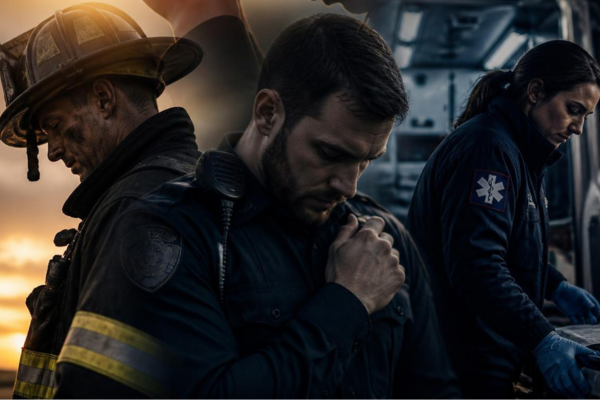
There is a common misconception that being vulnerable means being weak.
For first responders, that belief can be particularly difficult to challenge.
You may worry that admitting you're struggling will change how your colleagues see you. You may fear being judged, misunderstood, or perceived as incapable of doing your job.
But vulnerability doesn't mean abandoning your strength.
It means allowing yourself to be human.
You can be strong and still feel sad.
You can be courageous and still feel afraid.
You can be capable and still need support.
You can be a protector and still need someone to protect your well-being.
Asking for help doesn't erase your strength. It is an expression of it.
What Happens When Emotions Stay Buried?
Everyone processes difficult experiences differently.
Some people naturally talk about their feelings. Others need time before they are ready to open up.
There is no single correct way to process an experience.
However, consistently avoiding difficult emotions can make it harder to understand what you need.
You may notice yourself becoming more withdrawn.
You might lose patience more easily.
You may find yourself constantly distracted or unable to relax.
You might feel disconnected from people you care about.
Sometimes, you may not even realize how much you're carrying until something small suddenly feels overwhelming.
These experiences are not signs that you have failed.
They can be signals that you may need more space, support, or professional guidance.
Ways to Begin Emotional Healing
Emotional healing does not have to begin with a dramatic conversation.
Sometimes it starts with one honest moment:
"I'm not doing as well as I thought I was."
From there, there are many ways to begin exploring what you're feeling.
Talk With Someone You Trust
You don't have to tell everyone your story.
Start with someone who makes you feel safe.
That could be a trusted friend, partner, family member, colleague, peer, counselor, or therapist.
Sometimes simply being heard without judgment can make an experience feel less isolating.
Consider Professional Support
A trained mental health professional can provide a confidential space to explore difficult experiences and emotions.
Talk therapy can help you better understand your thoughts, feelings, reactions, and coping patterns.
You don't need to wait until you're in crisis to seek support.
Therapy can also be a proactive way to develop healthier tools for navigating the demands of first responder work.
Use Creative Expression
Not every emotion is easy to explain.
Sometimes words aren't enough.
Art, music, writing, photography, or other creative activities can provide another way to express what you're experiencing.
You don't need to consider yourself an artist.
The purpose isn't to create something perfect.
It's to give yourself another language for emotions that may be difficult to describe.
Practice Mindfulness
Mindfulness encourages you to pay attention to the present moment without immediately judging what you're experiencing.
This might involve quiet breathing, meditation, a body scan, mindful movement, or simply taking a few minutes to notice how you feel.
Instead of immediately pushing an emotion away, you can practice acknowledging it:
"This is difficult."
"I'm feeling overwhelmed."
"I need a moment."
That awareness can help you respond to yourself with greater compassion.
Write It Down
Journaling can be a private way to explore thoughts that are difficult to say out loud.
You might write about what happened, how you felt, what you're struggling with, or what you wish someone understood.
There are no rules.
You don't need perfect sentences.
You simply need a safe place to be honest with yourself.
Connect With People Who Understand
Sometimes the hardest part of opening up is feeling like nobody could possibly understand.
Connecting with other first responders or people who have experienced similar challenges can help reduce that sense of isolation.
Peer support can create an environment where you don't have to explain every part of the culture, the work, or the experiences that come with it.
You can simply say:
"You understand."
And sometimes that understanding matters.
Emotional Healing Is Not About Forgetting
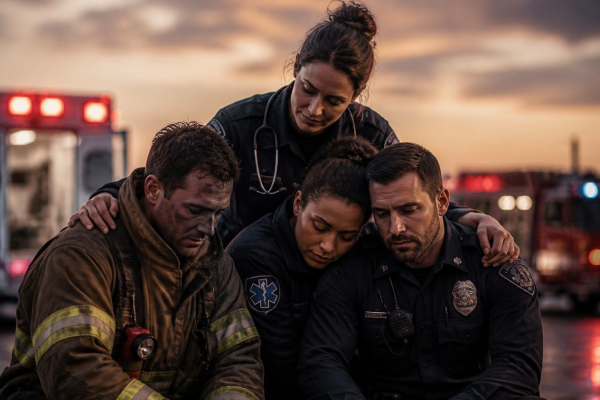
Healing does not mean pretending that difficult experiences never happened.
It doesn't mean erasing memories.
It doesn't mean suddenly becoming unaffected by the things you've witnessed.
Instead, healing can mean learning how to carry your experiences differently.
The goal isn't necessarily to forget the past.
It is to prevent the past from controlling every part of your present.
Your experiences are part of your story.
But they don't have to become the entire story.
There can still be room for connection.
There can still be room for laughter.
There can still be room for family, friendship, purpose, and hope.
Family and Friends Can Help Create a Safe Space
For family members and friends of first responders, knowing what to say isn't always easy.
You don't need to have all the answers.
You don't need to force someone to talk.
Sometimes the most helpful thing you can do is simply make it clear that you're available.
Try listening without immediately offering solutions.
Ask how they are doing—and genuinely give them time to answer.
Let them know that they don't have to hide difficult emotions around you.
And if they seem to be struggling, gently encourage them to consider professional support.
Your role isn't to fix everything.
Your role can simply be to remind them:
"You don't have to carry this alone."
A Message to First Responders
You have spent so much of your life learning how to protect others.
Now give yourself permission to protect your own well-being.
You don't have to be strong every second.
You don't have to have everything figured out.
You don't have to hide your emotions to prove that you are capable.
There is courage in saying, "This affected me."
There is courage in saying, "I need help."
There is courage in allowing someone else to stand beside you for a change.
And there is strength in choosing healing.
You Deserve a Safe Place to Heal
At The Phoenix Foundation, we believe first responders deserve access to meaningful mental health support and resources.
Your experiences matter.
Your emotions matter.
And you matter beyond the role you perform for others.
Whether your healing journey begins through professional therapy, peer support, creative expression, mindfulness, or another approach that feels right for you, taking that first step is an act of courage.
You don't have to forget what you've been through.
You simply deserve the opportunity to move forward with greater peace, connection, and hope.
Being vulnerable doesn't make you less strong.
It reminds you that beneath the uniform, badge, or title, you are human—and you deserve care, too.
